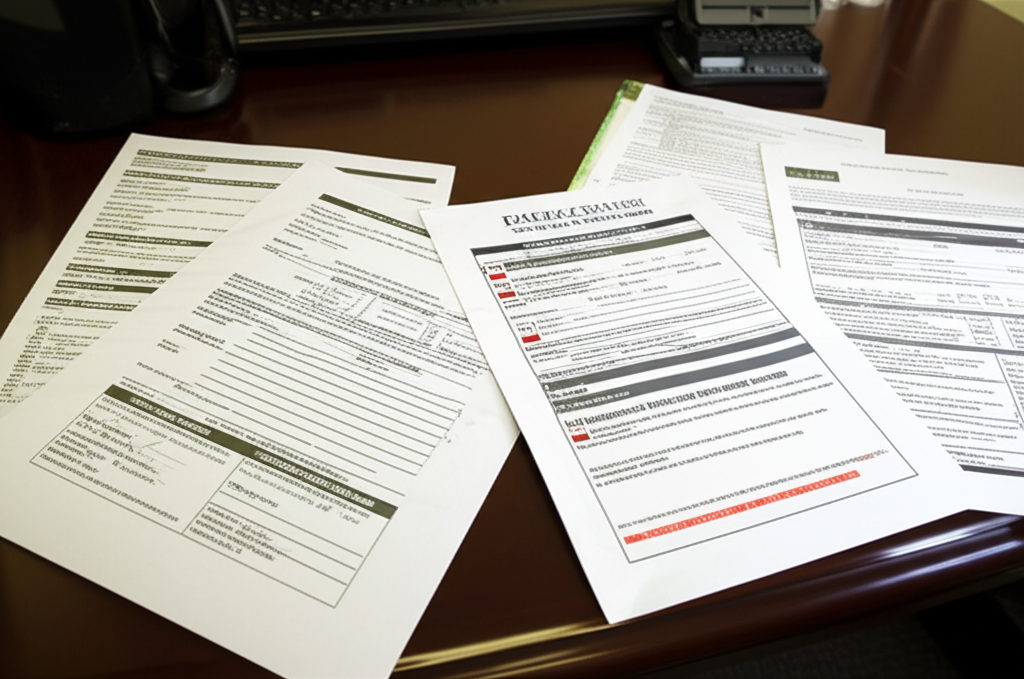
Deal Jacket Best Practices: Complete Documentation
Deal jacket checklist: required documents, signature verification, filing workflow. Avoid compliance violations with complete deal files.
"We can't find the buyer's guide for that sale." Four words that can cost your dealership $10,000 in fines, a failed audit, or a lost legal defense. Incomplete deal jackets are the #1 compliance violation independent dealers face during regulatory audits.
A deal jacket (also called deal folder or deal file) is a comprehensive, organized collection of ALL documents related to a single vehicle sale. Think of it as the permanent record of the transaction: purchase agreement, buyer's guide, credit documents, title paperwork, trade-in records, warranties, and delivery forms. Complete deal jackets protect against regulatory penalties, customer disputes, and audit failures.
Yet many dealers use inconsistent documentation: some deals have 15 documents, others have 7. Some folders are labeled "Smith - Jan 2024," others "A-12345." Critical documents (odometer statements, buyer's guides) go missing. This guide provides a systematic approach to deal jacket organization: required documents checklist, filing best practices, compliance verification, and audit preparation.
The Complete Deal Jacket Checklist
Category 1: Sales Transaction Documents (Required for Every Deal)
| Document | Purpose | Compliance Requirement |
|---|---|---|
| Purchase Agreement / Bill of Sale | Legal record of sale (price, terms, vehicle details) | State law (all jurisdictions) |
| Buyer's Guide (FTC - US only) | Warranty disclosure (As-Is vs Warranty) | FTC 16 CFR Part 455 (federal) |
| Odometer Disclosure Statement | Mileage certification (prevent fraud) | Federal Odometer Act (US), MVDA (Canada) |
| Title (Copy) | Proof of ownership transfer | State/Provincial DMV |
| Vehicle History Report (CarFax/AutoCheck) | Accident/damage disclosure | Best practice (liability protection) |
| Delivery Checklist | Proof vehicle delivered in disclosed condition | Best practice (dispute defense) |
| Inspection Report (Safety/Emissions) | Proof vehicle passed required inspections | State/Provincial law (varies) |
Category 2: Customer Credit & Financing Documents (If Financed)
| Document | Purpose | Compliance Requirement |
|---|---|---|
| Credit Application (Signed) | Customer authorization to pull credit | FCRA (Fair Credit Reporting Act) |
| Credit Report (Pulled) | Proof of permissible purpose for credit pull | FCRA (retain 25 months) |
| Retail Installment Contract | Financing terms (APR, payments, term) | TILA (Truth in Lending Act) |
| Adverse Action Notice (if declined) | Reason for credit denial or unfavorable terms | ECOA (Equal Credit Opportunity Act) |
| Lien Holder Assignment | Transfer of security interest to lender | UCC (Uniform Commercial Code) |
Category 3: Trade-In Documents (If Applicable)
| Document | Purpose | Compliance Requirement |
|---|---|---|
| Trade-In Vehicle Title | Proof customer owned trade-in | State/Provincial DMV |
| Lien Release (from previous lender) | Proof trade-in lien satisfied | UCC, PPSA (Personal Property Security Act) |
| Trade-In Bill of Sale | Legal record of trade-in acquisition | State law |
| Trade-In Appraisal Worksheet | Justification for trade-in value offered | Best practice (dispute defense) |
Category 4: F&I Products & Warranties (If Sold)
| Document | Purpose | Compliance Requirement |
|---|---|---|
| Service Contract / Extended Warranty | Terms of aftermarket warranty coverage | Magnuson-Moss Warranty Act (US) |
| GAP Insurance Agreement | Guaranteed Asset Protection terms | State insurance regulators |
| Tire & Wheel Protection Plan | Coverage terms for tire/wheel damage | State insurance regulators |
| Paint Protection / Fabric Protection | Terms of cosmetic protection products | Best practice (cancellation defense) |
| F&I Product Cancellation Forms | Customer's right to cancel (if applicable) | State law (varies) |
Category 5: DMV & Titling Documents
| Document | Purpose | Compliance Requirement |
|---|---|---|
| Power of Attorney (for Title Work) | Authorization to handle title transfer | State/Provincial DMV |
| Title Application | Request for new title in customer's name | State/Provincial DMV |
| Temporary Registration / Plates | Proof of legal operation during title transfer | State/Provincial DMV |
| Sales Tax Receipt | Proof sales tax collected and remitted | State/Provincial tax authority |
Deal Jacket Organization Best Practices
Folder Naming Convention
Use standardized naming format for easy retrieval:
Format: [Date]-[Customer Last Name]-[Stock Number]
Examples:
- 2026-01-15-Smith-A12345
- 2026-02-03-Johnson-B98765
- 2026-03-20-Garcia-C45678
Why this format works:
- Date first: Allows chronological sorting (oldest to newest)
- Customer name: Easy to find specific customer during disputes
- Stock number: Ties to vehicle inventory (cross-reference)
Document Arrangement (Chronological Order)
Arrange documents in order they were created during sales process:
- Credit Application (first document - customer applies for financing)
- Credit Report (pulled after application)
- Purchase Agreement (negotiated terms)
- Buyer's Guide (warranty disclosure before sale)
- Odometer Disclosure (signed at sale)
- Title Copy (received at/before sale)
- Trade-In Documents (if applicable)
- Finance Agreement (if financed)
- F&I Product Contracts (warranties, GAP, etc.)
- DMV Submission Forms (title app, temp registration)
- Delivery Checklist (last document - vehicle delivered)
Benefit: Chronological order tells the story of the deal. Auditors can follow the transaction from start to finish.
Completion Checklist (Inside Every Folder)
Include printed checklist as first page of folder:
Deal Jacket Checklist - Deal Date: ___________
Customer Name: ___________________ | Stock #: ___________
Required Documents (All Deals):
- ☐ Purchase Agreement / Bill of Sale (signed)
- ☐ Buyer's Guide (FTC - US only)
- ☐ Odometer Disclosure Statement
- ☐ Title (copy)
- ☐ Vehicle History Report (CarFax/AutoCheck)
- ☐ Delivery Checklist
Credit Documents (If Financed):
- ☐ Credit Application (signed)
- ☐ Credit Report
- ☐ Retail Installment Contract
- ☐ Lien Holder Assignment
Trade-In Documents (If Applicable):
- ☐ Trade-In Title
- ☐ Lien Release (if applicable)
- ☐ Trade-In Bill of Sale
F&I Products (If Sold):
- ☐ Service Contract / Warranty
- ☐ GAP Insurance
- ☐ Other F&I Products: _________________
Verified by: ___________________ Date: ___________
Filing System Options
| Storage Method | Pros | Cons | Best Use |
|---|---|---|---|
| Physical Filing Cabinets | No technology dependency, universally accepted | Space-intensive, fire/flood risk, slow retrieval | Backup for critical wet-signature docs |
| Cloud DMS (Digital) | Instant search, no physical space, disaster recovery | Requires scanning (upfront time), monthly cost | Primary storage (all documents) |
| Hybrid (Physical + Cloud) | Redundancy + accessibility | Duplicate effort (scan AND file) | Recommended: Digital primary, physical backup |
Recommended Approach: Scan all documents to cloud DMS (primary), keep physical copies of wet-signature documents (POAs, certain state title forms) in fireproof safe.
Deal Jacket Quality Control Process
Step 1: Real-Time Completion (During Sale)
- Assign responsibility: F&I manager assembles deal jacket before customer leaves
- Use checklist: Verify all required docs present before marking deal complete
- Flag missing docs: If document missing (e.g., title delayed), create placeholder note: "Title pending - expected by [date]"
Step 2: Weekly Audit (Every Friday)
- Random sampling: Pull 5 random deal jackets from current week
- Completeness check: Verify all required docs present using checklist
- Scan quality (if digital): Verify documents legible, no missing pages
- Remediation: If docs missing, retrieve from sales rep immediately (not "we'll get it later")
Step 3: Monthly Compliance Review (First of Month)
- Pull last month's deals: Review all deal jackets from previous month (100% audit)
- Critical doc verification: Ensure buyer's guide, odometer statement, title present (high-risk docs)
- Deficiency report: Track missing docs by type: "10 deals missing buyer's guide = training issue"
- Staff training: If patterns emerge (same rep missing docs), provide coaching
Common Deal Jacket Mistakes
1. Missing Buyer's Guide (FTC Violation - US)
Mistake: Buyer's guide not included in deal jacket OR wrong version used (warranty vs as-is).
Penalty: $10,000+ fine per violation (FTC Act Section 5)
Fix: Create buyer's guide in DMS automatically when deal created. Require manager approval to mark deal complete without buyer's guide.
2. Unsigned Odometer Disclosure
Mistake: Odometer statement present but not signed by customer/seller.
Penalty: $1,000-$10,000 per violation (Federal Odometer Act), deal voidable
Fix: Use pre-printed odometer forms with signature blocks. Train sales staff: "No signature = no sale."
3. No Credit Report Copy (FCRA Violation)
Mistake: Credit pulled but copy not retained in deal jacket.
Penalty: Cannot defend permissible purpose claim (FCRA). Fines: $1,000 per violation.
Fix: DMS automatically saves PDF copy of credit report to deal folder when pulled.
4. Inconsistent Folder Naming
Mistake: Some folders labeled "Smith Jan 2024", others "A-12345 Smith", no standard format.
Impact: Impossible to find specific deal during audit. Auditor asks for "Smith sale" - you have 5 Smith deals, no dates.
Fix: Mandate format: [Date]-[LastName]-[StockNumber]. Train staff, enforce consistency.
5. Documents Not in Chronological Order
Mistake: Documents randomly organized (buyer's guide at bottom, credit app in middle).
Impact: Wastes audit time (auditor must hunt for docs). Appears disorganized = more scrutiny.
Fix: Train F&I manager: Assemble folders in order (credit app → purchase agreement → delivery docs).
Deal Jacket Audit Preparation
Pre-Audit Readiness Checklist
- Document inventory: Count total deal jackets by year (e.g., 2024: 250 deals, 2023: 200 deals)
- Random sampling test: Pull 20 random deals → Verify completeness. If >10% incomplete, remediate before audit.
- Missing doc resolution: If critical docs missing (buyer's guide, odometer), document efforts to retrieve: "Attempted to contact customer for missing odometer - no response"
- Indexing: Create spreadsheet index: [Deal Date | Customer Name | Stock Number | Folder Location | Notes]
- Designate custodian: Assign one person (F&I manager or office manager) to retrieve deal jackets for auditor
During Audit: Deal Jacket Retrieval Protocol
- Log request: Auditor asks for "Smith deal from Jan 15, 2024" → Log request with timestamp
- Retrieve quickly: Use index to locate folder. Goal: <5 minutes retrieval time.
- Review before providing: Quickly scan folder to verify completeness. If doc missing, note: "Buyer's guide missing - investigating"
- Track what's provided: Maintain log: [Deal Jacket | Provided to Auditor | Date/Time | Returned Y/N]
- Escalate gaps: If auditor identifies missing doc, notify owner immediately (not end of day)
Frequently Asked Questions
What is a deal jacket in automotive sales?
A deal jacket (also called deal folder or deal file) is a comprehensive folder containing ALL documents related to a vehicle sale: purchase agreement, buyer's guide, credit application, finance contract, title documents, trade-in paperwork, warranties, and delivery checklist. It's your complete record of the transaction.
What documents are required in every deal jacket?
Essential documents: Purchase agreement/bill of sale, Buyer's Guide (FTC - US), odometer disclosure, title copy, credit application + report, finance agreement (if financed), trade-in documents (if applicable), warranty contracts, vehicle history report, and delivery checklist. Missing any document = compliance violation.
How should deal jackets be organized?
Use standardized folder naming: [Date]-[Customer Last Name]-[Stock Number]. Arrange documents chronologically (credit app first, delivery docs last). Include checklist to verify completeness. Separate active deals (current year) from archived deals (7+ years old) for easy retrieval.
Can deal jackets be stored electronically?
Yes, if documents are scanned at 300+ DPI, stored as non-editable PDFs, encrypted, and backed up daily. However, some jurisdictions require wet signatures on certain documents (power of attorney for titles). Best practice: hybrid storage (digital primary, physical backup for critical docs).
What happens if a deal jacket is incomplete during an audit?
Missing documents = compliance violations. Penalties: $1,000-$10,000 per missing document (FTC, state DMV), inability to defend customer lawsuits (no proof of disclosure), presumption of fault in disputes, and potential dealer license suspension for repeat violations.
How long do I need to keep deal jackets?
Federal law: 5 years minimum (FTC Used Car Rule). State/provincial laws vary: 3-7 years. Canada: 7 years (CRA). Best practice: Keep 7 years to cover longest requirement. Never destroy deal jackets during ongoing litigation or audits, even if retention period expired.
Never have an incomplete deal jacket again.
DealerOneView DMS includes automated deal jacket checklists, document verification workflows (prevents marking deal complete with missing docs), cloud storage with instant search, and audit-ready reporting. Every deal fully documented, every time.
See Deal Jacket System in Action →
Related Articles
Get More Insights Like This
Subscribe to our newsletter for the latest dealership tips and industry trends.